



Not all mental health treatment happens in hospitals — and it shouldn’t. At We Conquer Together, we provide residential treatment in beautiful, private home located in Yorba Linda, California, designed to feel like exactly that: a home. You won’t find sterile floors, loud alarms, or fluorescent lights here. Instead, you’ll find clean, upscale suburban houses where life feels calm, structured, and livable — even while you’re healing.
This is not a temporary facility. It’s a supportive, restorative living environment where your mental health can improve without sacrificing comfort or dignity.
When people hear “residential treatment center,” many imagine hospital beds or locked units. We’re the opposite. Each of our homes is nestled within one of Orange County’s most peaceful neighborhoods — clean sidewalks, palm trees, quiet streets, and scenic views included.
Whether you’re preparing your morning coffee, journaling on the patio, or watching a movie in the evening with your housemates, the daily rhythms here are meant to mirror normal life — with structure, safety, and skilled clinical support integrated into your day.
We intentionally designed our homes to remove the pressure of clinical settings. Here’s why:






Professionals are standing by and ready to give you a free verification of benefits. Insurance could cover up to 100% of the cost of treatment.
Each day at We Conquer Together blends therapeutic work with peaceful living. Here’s what that actually looks like inside the home:
Shared home-cooked meals at the kitchen table crafted by a Registered Dietitian
Quiet mornings with coffee or tea and self-reflection
Private bedrooms that offer a space to rest and recharge
Group conversations in the living room or therapy space
Walks through the neighborhood or outdoor movement in the backyard
Boundaries that support structure, like quiet hours and technology guidelines
Every part of the day is designed to restore balance — emotionally, physically, and socially. You’ll be living, not just staying.
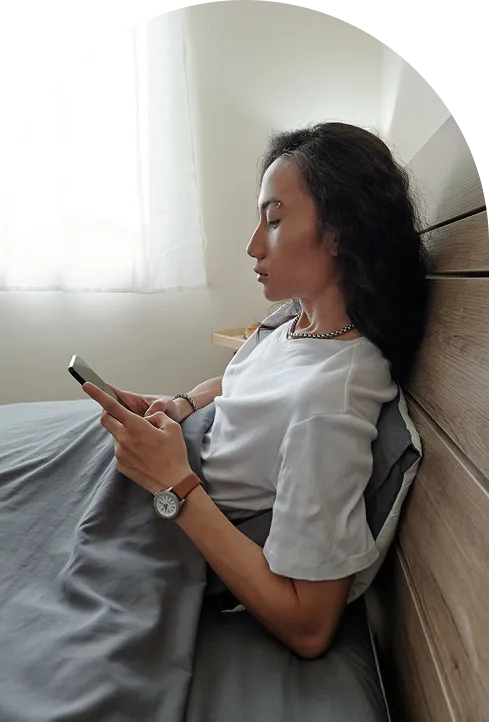
We’ve taken great care to ensure each residence offers comfort and quality. Some highlights:
You’re not staying in a hospital wing. You’re living in a home built for healing.
While this page is about the home environment, it’s worth noting that our residences serve adults with:
Our homes offer a safe, contained setting where you can recover without outside stressors interrupting your progress.
Too often, adults in need of serious mental health care are faced with extremes — a short hospital stay or the challenge of managing alone at home. Our residential treatment homes offer something better: a middle space where life feels livable and healing feels possible.
Living in a therapeutic home gives you:
Whether you’re reaching out for yourself or a loved one, we’re here to answer your questions about what it’s really like to live in a residential treatment center. If you’re looking for an Orange County residential treatment center that feels like a home, not a hospital — you’re in the right place. Contact us today to speak with our admissions team. We’re ready to welcome you.
One of the most common worries adults have before entering residential treatment is this: Will I lose my sense of self?
The thought of sharing a home with strangers, giving up privacy, or following a structured schedule can feel overwhelming — especially if you’re used to living independently. Many fear that entering a program means giving up control, or that they’ll be stuck in a rigid environment that doesn’t allow for personal choice.
At We Conquer Together, we approach this differently.
Our homes are designed to honor your independence while offering just enough structure to help you heal. You’ll have your own space, your own boundaries, and your own voice — always. Yes, you’ll share a home with a small group of other women, but many residents are surprised to find how refreshing that community can feel. You’re not just cohabiting — you’re connecting, learning, and building trust with others who get it.
You’re never alone, but you’re also never lost in the crowd. We make sure you’re part of a respectful, quiet, and empowering environment where you still get to be you — just with more support.
If you’ve been putting off treatment because you’re afraid of losing your space, your freedom, or yourself — we want you to know: it doesn’t have to be that way.
At We Conquer Together, our residential homes in Orange County are built to help you feel grounded, respected, and supported — not institutionalized. This is your healing, your space, and your time.
Call us today to speak with our admissions team, ask your questions, or schedule a private tour.
Let’s take this next step together — one peaceful day at a time.
Yes. Each of our homes offers private or semi-private rooms, and your personal space is respected at all times. There are quiet hours and space for journaling, resting, or reflecting on your own.
We keep our homes small (4–6 women per house) to foster connection without overwhelm. Our staff helps support healthy communication and respectful boundaries. You’re never forced to “bond” — but you may be surprised by how naturally connection forms.
There is a structured daily rhythm, but it’s balanced with flexibility. The goal is to create consistency that supports your healing — not to control your every move. You’ll have breaks, personal time, and a say in your treatment plan.
Absolutely. Alone time is essential to the healing process. You’ll have downtime built into each day, and you’re encouraged to take space when needed, as long as it supports your well-being.
No. Our program is designed to rebuild your independence — not take it away. From daily routines to personal responsibilities, we help you regain the confidence to live well on your own terms.
Yes. A trained staff member is in the home 24/7. Each house has a private staff office to coordinate medications, answer questions, and offer support whenever you need it — without hovering.
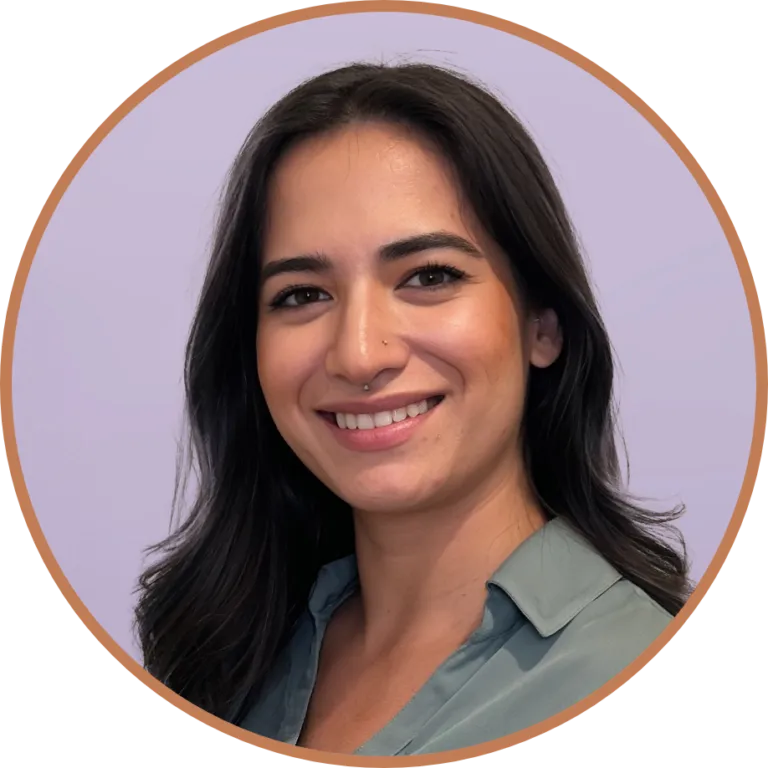
Sasha Antoun holds over six years of experience in the behavioral health treatment landscape. With a comprehensive background spanning various facets of the field, she brings a wealth of expertise to our team, offering a great understanding of every available level of care.
As an internationally certified counselor, Sasha’s professional areas of focus primarily center around admissions work and community outreach. Her passion lies in creating a sense of safety and trust for those in distress.
Medically reviewed by Dr. Kelly Gonderman, Psy.D., Licensed Clinical Psychologist
We Conquer Together
We firmly believe that the internet should be available and accessible to anyone, and are committed to providing a website that is accessible to the widest possible audience, regardless of circumstance and ability.
To fulfill this, we aim to adhere as strictly as possible to the World Wide Web Consortium’s (W3C) Web Content Accessibility Guidelines 2.1 (WCAG 2.1) at the AA level. These guidelines explain how to make web content accessible to people with a wide array of disabilities. Complying with those guidelines helps us ensure that the website is accessible to all people: blind people, people with motor impairments, visual impairment, cognitive disabilities, and more.
This website utilizes various technologies that are meant to make it as accessible as possible at all times. We utilize an accessibility interface that allows persons with specific disabilities to adjust the website’s UI (user interface) and design it to their personal needs.
Additionally, the website utilizes an AI-based application that runs in the background and optimizes its accessibility level constantly. This application remediates the website’s HTML, adapts Its functionality and behavior for screen-readers used by the blind users, and for keyboard functions used by individuals with motor impairments.
If you’ve found a malfunction or have ideas for improvement, we’ll be happy to hear from you. You can reach out to the website’s operators by using the following email
Our website implements the ARIA attributes (Accessible Rich Internet Applications) technique, alongside various different behavioral changes, to ensure blind users visiting with screen-readers are able to read, comprehend, and enjoy the website’s functions. As soon as a user with a screen-reader enters your site, they immediately receive a prompt to enter the Screen-Reader Profile so they can browse and operate your site effectively. Here’s how our website covers some of the most important screen-reader requirements, alongside console screenshots of code examples:
Screen-reader optimization: we run a background process that learns the website’s components from top to bottom, to ensure ongoing compliance even when updating the website. In this process, we provide screen-readers with meaningful data using the ARIA set of attributes. For example, we provide accurate form labels; descriptions for actionable icons (social media icons, search icons, cart icons, etc.); validation guidance for form inputs; element roles such as buttons, menus, modal dialogues (popups), and others. Additionally, the background process scans all the website’s images and provides an accurate and meaningful image-object-recognition-based description as an ALT (alternate text) tag for images that are not described. It will also extract texts that are embedded within the image, using an OCR (optical character recognition) technology. To turn on screen-reader adjustments at any time, users need only to press the Alt+1 keyboard combination. Screen-reader users also get automatic announcements to turn the Screen-reader mode on as soon as they enter the website.
These adjustments are compatible with all popular screen readers, including JAWS and NVDA.
Keyboard navigation optimization: The background process also adjusts the website’s HTML, and adds various behaviors using JavaScript code to make the website operable by the keyboard. This includes the ability to navigate the website using the Tab and Shift+Tab keys, operate dropdowns with the arrow keys, close them with Esc, trigger buttons and links using the Enter key, navigate between radio and checkbox elements using the arrow keys, and fill them in with the Spacebar or Enter key.Additionally, keyboard users will find quick-navigation and content-skip menus, available at any time by clicking Alt+1, or as the first elements of the site while navigating with the keyboard. The background process also handles triggered popups by moving the keyboard focus towards them as soon as they appear, and not allow the focus drift outside it.
Users can also use shortcuts such as “M” (menus), “H” (headings), “F” (forms), “B” (buttons), and “G” (graphics) to jump to specific elements.
We aim to support the widest array of browsers and assistive technologies as possible, so our users can choose the best fitting tools for them, with as few limitations as possible. Therefore, we have worked very hard to be able to support all major systems that comprise over 95% of the user market share including Google Chrome, Mozilla Firefox, Apple Safari, Opera and Microsoft Edge, JAWS and NVDA (screen readers).
Despite our very best efforts to allow anybody to adjust the website to their needs. There may still be pages or sections that are not fully accessible, are in the process of becoming accessible, or are lacking an adequate technological solution to make them accessible. Still, we are continually improving our accessibility, adding, updating and improving its options and features, and developing and adopting new technologies. All this is meant to reach the optimal level of accessibility, following technological advancements. For any assistance, please reach out to