
Key Takeaways
- Men’s body image issues are serious clinical concerns, not superficial vanity, yet they are frequently overlooked.
- Most body image resources are tailored to women, leaving men unable to recognize their own specific struggles.
- Muscle dysmorphia is a severe presentation of body dysmorphic disorder rather than a simple lifestyle choice.
- These clinical concerns regularly overlap and interact with OCD, complex trauma (CPTSD), and neurodivergence.
- LGBTQIA+ men experience disproportionately higher rates of body dissatisfaction but are often left out of care.
- When distress exceeds what weekly therapy can manage, residential treatment and detailed assessment offer a path forward.
Specialized Clinical Care for Men’s Body Image Concerns
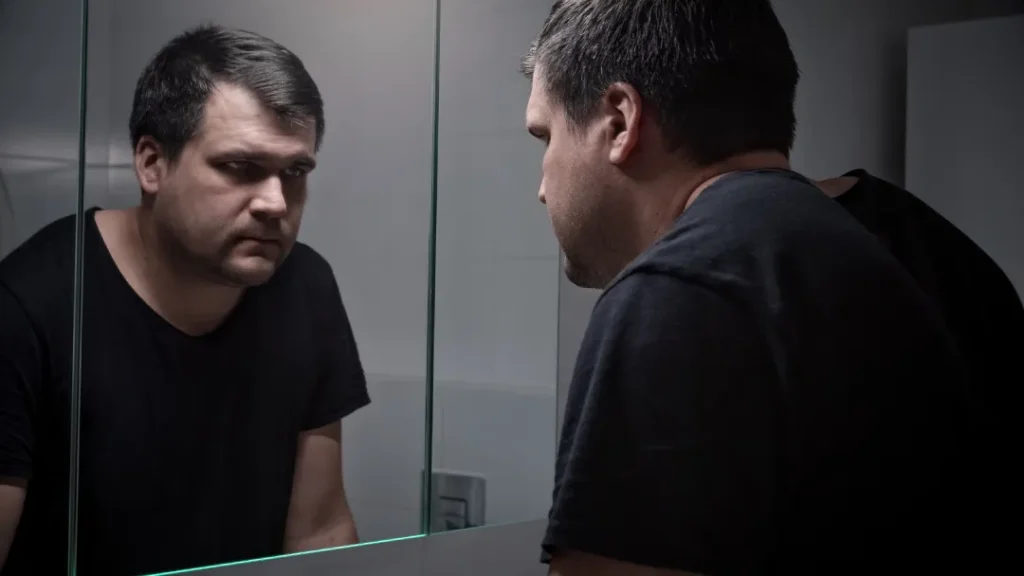
Do you feel that your struggles with men’s body image issues are often ignored or misunderstood in traditional clinical environments? It is difficult to find support tailored to your experience when most resources sort concerns into superficial categories or suggest simple lifestyle changes. Body image distress in men is a serious clinical condition requiring structured, compassionate care.
Many resources often simplify these challenges by blaming social media and offering generic advice. They rarely address an adult man whose distress has escalated past what a weekly therapy hour can hold, or explain what structured care actually involves. A level of care exists between one appointment a week and feeling completely alone in your struggle, providing a dedicated space where your experience is met with dignity and evidence-based clinical support.
Identifying Men’s Body Image Issues and Dysmorphia
When a man is experiencing body image issues, their perception of their physical form does not match what others see in reality. This disconnect leads to repetitive behaviors, such as checking and comparison, which briefly reduce anxiety but ultimately increase distress over time. Men may also avoid social situations where their body is visible, leading to isolation and low mood.
These struggles often sit alongside disordered eating, and should be assessed together rather than separately. Muscle dysmorphia is a specific presentation of body dysmorphic disorder where a person perceives their physique as insufficiently lean or muscular, regardless of their actual physical state. Popular colloquial labels like reverse anorexia or bigorexia are sometimes encountered online, but clinicians recognize this presentation strictly as a form of body dysmorphic disorder. For background on this condition, the International OCD Foundation (IOCDF) provides clinical resources on how body dysmorphic disorder develops and manifests.
Considering LGBTQIA+ Men and Body Image
Gay, bisexual, and transgender men carry elevated body dissatisfaction and are often the least supported in clinical settings. These challenges are shaped by appearance-graded community spaces, minority stress, and clinical environments that fail to ask the right questions. Addressing these issues requires an approach that validates how identity influences a person’s relationship with their body. It’s important for members of the LBGTQIA+ communities to be given an environment where identity is respected as a core component of healing, delivering factual, supportive clinical care that honors each individual’s lived experience without judgment.
Body Image Issues and Co-Occurring Mental Health Conditions
Body image distress in men very often sits alongside other psychiatric conditions, and these co-occurring challenges directly change how the distress behaves. Trying to treat these issues in isolation fails because the untreated half inevitably pulls the other back down, which is why our house treats them together under one coordinated plan. The interaction between body image struggles and co-occurring conditions manifests in specific ways:
- Obsessive-Compulsive Disorder: Checking and reassurance-seeking share a mechanism with compulsions, causing relief to fade quickly while the rule set expands.
- Complex Post-Traumatic Stress Disorder: Controlling the body functions as a safety strategy when the physical self was a site of harm or humiliation, making rules difficult to loosen.
- Neurodivergence: Sensory sensitivities, interoceptive differences, routine as regulation, and a preference for structure shape eating and physical habits in ways that require clinical understanding.
- Disordered Eating: Restrictive eating and rigid physical routines reinforce anxiety and low mood, requiring integrated care for both emotional and physical wellness.
Addressing these complex interactions requires specialized co-occurring care that supports your emotional and physical well-being together.
When Body Image Distress Outgrows Weekly Therapy
When daily rules keep expanding, your schedule becomes organized around them, and a weekly therapy hour is spent reporting the week rather than changing it, that is a signal to reassess your level of care. Escalation shows up functionally as work slipping, relationships thinning out, sleep deteriorating, and low mood setting in, alongside a feeling that stopping your routine is impossible.
If thoughts of suicide or self-harm are present, the 988 Suicide & Crisis Lifeline is available by call or text, day or night. For individuals who require more structure than weekly outpatient visits can provide, residential care can provide more constant support and supervision.
The Purpose of Clinical Treatment of Men’s Body Image Struggles
While standard weekly therapy often focuses on surface-level encouragement or general confidence coaching, specialized clinical treatment for men’s body image struggles targets the underlying psychological mechanisms that drive body dysmorphia and compulsive behaviors. A structured clinical approach integrates multiple evidence-based modalities and multidisciplinary care to address disruptions that a single weekly therapy hour cannot fully contain:
- Cognitive Behavioral Therapy: Identifies and reframes intrusive thought patterns that perpetuate body checking, muscle dysmorphia, and avoidance behaviors.
- Dialectical Behavior Therapy: Builds distress tolerance to manage intense anxiety when rigid fitness, dietary, or body-related rules are interrupted.
- Acceptance and Commitment Therapy: Helps shift focus away from physical control toward actions aligned with core personal values.
- Trauma-Focused Therapy: Addresses past trauma or adverse experiences that contribute to using the physical body as a mechanism of control or protection.
- Somatic Therapy and Mindfulness: Re-establishes a connection with internal bodily sensations, helping individuals perceive the body as an experiential system rather than an object to be modified.
- Nutritional and Exercise Rehabilitation: Compulsive physical activity is evaluated alongside psychiatric providers and a registered dietitian, using individualized plans rather than blanket bans. Weekly nutrition counseling focuses on restoring physiological cues and balanced nourishment.
Unlike standard outpatient sessions where therapy and nutrition advice operate in isolation, specialized clinical care coordinates psychiatric oversight, psychological therapy, and dietitian-led guidance into one unified framework. This multidisciplinary structure allows individuals to interrupt acute body-checking loops, dismantle rigid exercise rules, and rebuild trust with physical cues in real time.
Accelerated Treatment Timelines and Expected Milestones
While many body image struggles can be addressed in individual therapy, clinical treatment of body dysmorphia may accelerate the rate of recovery, with higher levels of care, and additional support on a daily basis.
Initial Stabilization (Weeks 1 to 3): Focuses on interrupting acute body-checking loops, establishing structured nutrition, and stabilizing emotional distress through core DBT and somatic grounding techniques.
Core Therapeutic Work (Weeks 4 to 8): Shifts toward deep cognitive restructuring and trauma processing. Individuals actively practice exposure techniques to dismantle rigid rule sets surrounding exercise, food, and physical appearance.
Integration and Long-Term Maintenance (Weeks 9 to 12+): Consolidates progress through ACT-based value alignment and ongoing dietary integration. Lasting shifts in body perception and the dismantling of compulsive behaviors typically require sustained clinical engagement over this multi-month timeframe.
Talk With We Conquer Together About Body Image Care for Men
Residential treatment programs built around small household capacities operate with a distinct structural model. Rather than enforcing fixed schedules designed for large patient populations, smaller homes allow group modalities to be shaped dynamically around the individuals in residence at any given time. This structure supports a man addressing body image issues alongside peers navigating different clinical presentations.
Facilities designed with private and semi-private rooms, paired with 24/7 staff coverage, maintain clinical safety and personal privacy throughout treatment. The process begins with an intake evaluation and clinical assessment to determine appropriate levels of care and align treatment options with individual needs.
FAQs about Men’s Body Image Issues
Can men have eating disorders and body image disorders?
Yes, men experience eating disorders and body image disorders across all body shapes and sizes. These conditions are frequently missed by clinicians because standard screening questions and public messaging were historically designed around women’s experiences. Receiving a proper clinical assessment is the first step toward finding appropriate support.
Does treatment here mean giving up exercise entirely?
No, treatment does not involve a blanket ban on physical activity. Movement is evaluated clinically with the support team and registered dietitian, as the same activity can serve very different emotional functions for different individuals. Specific decisions regarding movement are made individually through clinical assessment rather than rigid rules.
Is muscle dysmorphia the same as an eating disorder?
Muscle dysmorphia is a presentation of body dysmorphic disorder that involves a perception of being insufficiently muscular or lean. While it frequently occurs alongside eating disorders in men, it is classified as a body dysmorphic disorder. Our program assesses and treats both conditions together under one coordinated plan.
How do I know whether this is a real problem or just discipline?
Distress and functional impairment are the primary markers that distinguish a clinical concern from routine discipline. When rigid rules interfere with your work, relationships, social life, or emotional stability, it indicates that the behavior has outgrown personal choice. A clinical assessment can help determine whether professional support is appropriate for your situation.
What happens in residential care for body image distress?
Residential care involves living on site in a staffed house with structured clinical programming, psychiatric care, therapy, and nutrition support. Individuals participate in individual therapy, group sessions, and dietitian-led meal support in a quiet environment. This structure provides a safe space to work through complex challenges away from daily stressors.
Will anyone here understand a man’s version of this?
Our house serves adults of all genders, providing LGBTQIA+ affirming, weight-inclusive care tailored to individual needs. Group content is shaped around the specific people living in the house each week, ensuring that your perspective is heard and validated. Our support team is trained to address the unique ways men experience body image distress and mental health challenges.