

Welcome to We Conquer Together, a treatment center in Orange County, California, offering specialized mental health care for neurodivergent individuals. A support team that understands neurodiversity changes the trajectory of recovery. We provide environments that accommodate diverse processing styles and focus on overall well-being without requiring clients to conform to neurotypical standards. Our in-person programs deliver support tailored to how individuals experience the world.
Our clinical model integrates psychiatry and therapy to provide stabilization that honors lived experience. We implement evidence-based protocols and coordinate with providers to build frameworks aligned with personal goals. By limiting sensory stimuli and providing structured accommodations, we ensure clients focus on healing in an environment that recognizes their specific needs.
The neurodiversity movement views brain differences as natural variations in human development rather than deficits to be cured. This framework avoids pathologizing individuals who process information differently than neurotypical people. Embracing a neurodivergent identity means honoring the perspectives and experiences of neurodivergent communities. Society often relies on structures built for neurotypical individuals, and this mismatch creates hurdles in navigating daily routines.
A neurodiversity-affirming approach acknowledges these differences while building on the unique strengths of the individual. Clinicians use a strengths-based model that never forces individuals to mask their traits, as masking frequently leads to burnout and exhaustion. We encourage self-advocacy and support individuals as they navigate their environments so that their experiences feel validated and respected by their care team.
Many diagnoses fall under this umbrella, requiring providers to establish an environment that truly supports these variations. Interventions focus on building skills and creating treatment plans that respect neurological differences. Clinicians assess needs upon admission and collaborate with the individuals in our care to define their goals.
This umbrella includes:

Neurodivergent adults and adolescents often navigate environments that cause stress, which can subsequently lead to mental health conditions. Autistic people and individuals with ADHD frequently seek care for secondary struggles that develop alongside their primary neurodivergence. This overlap requires an approach that evaluates the root cause of the distress to determine if it stems from the environment or a co-occurring condition.
Common symptoms and overlapping challenges include:
Finding a therapeutic approach that aligns with your mind is a priority. Clinicians build treatment plans that respect neurological differences, and our LGBTQIA+ inclusive programs provide spaces that prioritize self-care. We use therapeutic approaches that support self-advocacy while coordinating with providers to deliver mental health care that adapts to different learning styles.
Therapies utilized in this process include:
Get started today
Getting help can feel hard, but you’re not alone. Our team can check your insurance for free, and many plans cover all treatment costs.

We offer accommodations specifically designed for autistic individuals and neurodivergent communities. Because sensory processing differences require a customized environment, we provide options to reduce overload and integrate elements that support stabilization. We listen to feedback from the individuals in our care so we can adjust the environment to meet their requirements.
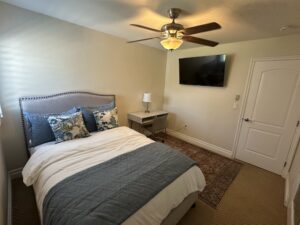
One feature of our program is the Sensory Heal Pod, which utilizes sound frequencies and vibrations to calm the autonomic nervous system. It provides relaxation for individuals experiencing sensory overload by offering a retreat from stimuli that supports emotion regulation. Users select specific frequencies while the vibrations match the selected sounds, creating a grounding effect that assists the brain in regulating input. Furthermore, we provide private rooms upon request to offer a space for individuals to decompress and reduce social demands at the conclusion of the day. This option supports stabilization because it allows the nervous system to return to a baseline without the fatigue of shared environments.
Our program includes a Registered Dietitian who provides nutrition counseling that takes sensory sensitivities, food textures, and flavor preferences into account. We strive to create a supportive environment where individuals can work toward meeting their nutritional needs while feeling understood and respected.
The Registered Dietitian collaborates closely with each client to develop individualized nutrition goals and meal plans. While sensory preferences and aversions are thoughtfully considered, treatment may also include gradual, clinically appropriate exploration of new foods when doing so supports nutritional adequacy, flexibility, and recovery goals.
This balanced approach helps build trust while ensuring that nutrition support remains both compassionate and therapeutic. Rather than relying on rigid expectations or forced exposure, we work collaboratively to help individuals expand their comfort zones at a pace that aligns with their clinical needs and readiness for change.
Finding mental health care requires a support team that values your perspective. Our psychiatry services offer medication management while planning the transition to outpatient care when you are ready. We ensure our methods remain current, allowing us to train our providers in neurodiversity-affirming practices that integrate the perspectives of autistic adults into our program design.
If you or a family member are looking for an evidence-based program, contact our purpose-built facility today. Reach out to our admissions department to discuss how our programs can assist you as we verify insurance benefits and guide you through the intake process.
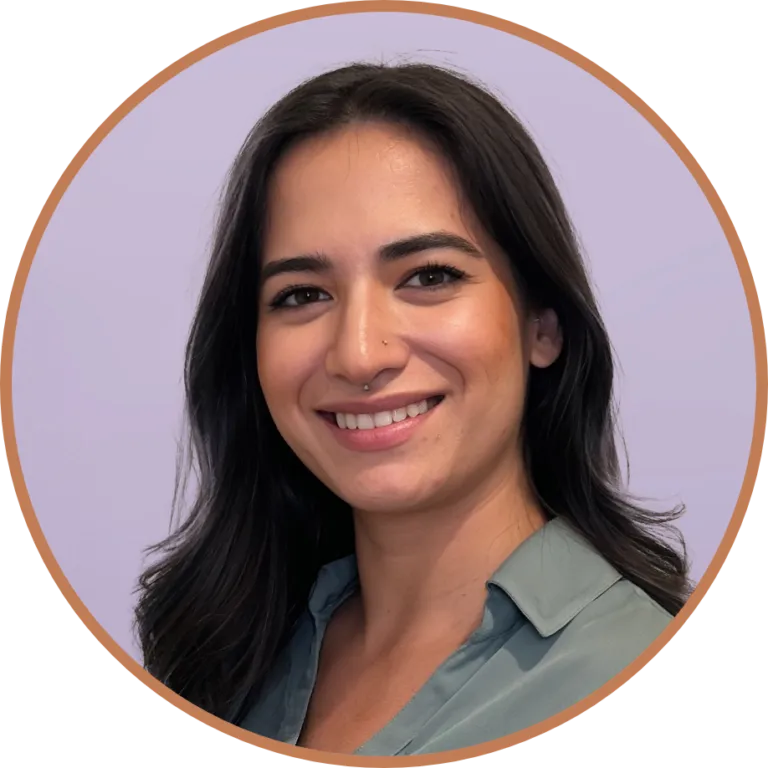
Sasha Antoun holds over six years of experience in the behavioral health treatment landscape. With a comprehensive background spanning various facets of the field, she brings a wealth of expertise to our team, offering a great understanding of every available level of care.
As an internationally certified counselor, Sasha’s professional areas of focus primarily center around admissions work and community outreach. Her passion lies in creating a sense of safety and trust for those in distress.
Medically reviewed by Dr. Kelly Gonderman, Psy.D., Licensed Clinical Psychologist
It means we view brain differences as natural variations rather than illnesses to be cured. We do not try to eliminate autism or ADHD traits. We support individuals in building skills that work for their processing styles.
The pod uses sound and vibration to calm the nervous system. It offers a break from environmental stimuli that can cause distress. It helps individuals process sensory input safely.
We offer private rooms upon request to accommodate sensory and social needs. Availability depends on the census of the facility at the time of admission. We prioritize individuals with documented sensory requirements.
The dietitian provides sensory-informed nutrition support that respects food preferences and sensory sensitivities while helping individuals meet their nutritional needs. Nutrition goals, meal progression, and food exposures are individualized and guided collaboratively by the dietitian and treatment team.
Yes, we treat OCD alongside neurodivergent conditions. We adapt therapies to accommodate processing differences so the care remains effective. We address both areas simultaneously to ensure complete stabilization.
We coordinate with outpatient providers to ensure a seamless transition. We build a step-down plan for individuals in our care before they leave the facility. We ensure continuity of support after discharge to maintain progress.
We Conquer Together
We firmly believe that the internet should be available and accessible to anyone, and are committed to providing a website that is accessible to the widest possible audience, regardless of circumstance and ability.
To fulfill this, we aim to adhere as strictly as possible to the World Wide Web Consortium’s (W3C) Web Content Accessibility Guidelines 2.1 (WCAG 2.1) at the AA level. These guidelines explain how to make web content accessible to people with a wide array of disabilities. Complying with those guidelines helps us ensure that the website is accessible to all people: blind people, people with motor impairments, visual impairment, cognitive disabilities, and more.
This website utilizes various technologies that are meant to make it as accessible as possible at all times. We utilize an accessibility interface that allows persons with specific disabilities to adjust the website’s UI (user interface) and design it to their personal needs.
Additionally, the website utilizes an AI-based application that runs in the background and optimizes its accessibility level constantly. This application remediates the website’s HTML, adapts Its functionality and behavior for screen-readers used by the blind users, and for keyboard functions used by individuals with motor impairments.
If you’ve found a malfunction or have ideas for improvement, we’ll be happy to hear from you. You can reach out to the website’s operators by using the following email
Our website implements the ARIA attributes (Accessible Rich Internet Applications) technique, alongside various different behavioral changes, to ensure blind users visiting with screen-readers are able to read, comprehend, and enjoy the website’s functions. As soon as a user with a screen-reader enters your site, they immediately receive a prompt to enter the Screen-Reader Profile so they can browse and operate your site effectively. Here’s how our website covers some of the most important screen-reader requirements, alongside console screenshots of code examples:
Screen-reader optimization: we run a background process that learns the website’s components from top to bottom, to ensure ongoing compliance even when updating the website. In this process, we provide screen-readers with meaningful data using the ARIA set of attributes. For example, we provide accurate form labels; descriptions for actionable icons (social media icons, search icons, cart icons, etc.); validation guidance for form inputs; element roles such as buttons, menus, modal dialogues (popups), and others. Additionally, the background process scans all the website’s images and provides an accurate and meaningful image-object-recognition-based description as an ALT (alternate text) tag for images that are not described. It will also extract texts that are embedded within the image, using an OCR (optical character recognition) technology. To turn on screen-reader adjustments at any time, users need only to press the Alt+1 keyboard combination. Screen-reader users also get automatic announcements to turn the Screen-reader mode on as soon as they enter the website.
These adjustments are compatible with all popular screen readers, including JAWS and NVDA.
Keyboard navigation optimization: The background process also adjusts the website’s HTML, and adds various behaviors using JavaScript code to make the website operable by the keyboard. This includes the ability to navigate the website using the Tab and Shift+Tab keys, operate dropdowns with the arrow keys, close them with Esc, trigger buttons and links using the Enter key, navigate between radio and checkbox elements using the arrow keys, and fill them in with the Spacebar or Enter key.Additionally, keyboard users will find quick-navigation and content-skip menus, available at any time by clicking Alt+1, or as the first elements of the site while navigating with the keyboard. The background process also handles triggered popups by moving the keyboard focus towards them as soon as they appear, and not allow the focus drift outside it.
Users can also use shortcuts such as “M” (menus), “H” (headings), “F” (forms), “B” (buttons), and “G” (graphics) to jump to specific elements.
We aim to support the widest array of browsers and assistive technologies as possible, so our users can choose the best fitting tools for them, with as few limitations as possible. Therefore, we have worked very hard to be able to support all major systems that comprise over 95% of the user market share including Google Chrome, Mozilla Firefox, Apple Safari, Opera and Microsoft Edge, JAWS and NVDA (screen readers).
Despite our very best efforts to allow anybody to adjust the website to their needs. There may still be pages or sections that are not fully accessible, are in the process of becoming accessible, or are lacking an adequate technological solution to make them accessible. Still, we are continually improving our accessibility, adding, updating and improving its options and features, and developing and adopting new technologies. All this is meant to reach the optimal level of accessibility, following technological advancements. For any assistance, please reach out to