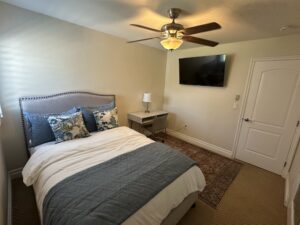


Welcome to We Conquer Together, a premier residential facility in Orange County dedicated to providing innovative, high-quality mental health care. For individuals suffering from severe trauma and profound physical hyperarousal, standard therapeutic methods sometimes do not provide enough immediate relief. That is why our comprehensive treatment program includes the strategic use of SGB injections. By coordinating this advanced medical procedure, we provide our clients with a safe, highly structured space to experience rapid, profound relief from a severely overactive nervous system.
Our dedicated clinical team integrates this powerful tool directly alongside traditional psychotherapy to ensure you receive the most robust, well-rounded care possible. We seamlessly blend these modern medical interventions with deeply compassionate, individualized support. By addressing the biological roots of trauma first, we ensure that every person who walks through our doors has the exact physiological and emotional tools they need to reclaim their overall quality of life and foster lasting wellness.
A stellate ganglion block is a specialized, minimally invasive medical procedure designed to temporarily “turn off” the specific nerves that control the body’s acute stress responses. During an SGB injection, a highly trained healthcare professional carefully administers a specialized local anesthetic directly into the cervical sympathetic chain, a collection of nerves located deep in the neck. These sympathetic nerves are a crucial component of the sympathetic nervous system, which is entirely responsible for triggering the body’s involuntary fight or flight and flight response.
To ensure absolute precision and safety during the procedure, a dedicated healthcare provider will utilize ultrasound guidance, fluoroscopic imaging, or x-ray technology to pinpoint the exact anatomical location. This continuous image guidance allows the medication to be delivered safely and accurately to the cervical ganglion near the upper chest and lower neck. By temporarily blocking these specific nerve signals, an SGB treatment effectively “reboots” the autonomic nervous system, rapidly reducing severe physical anxiety symptoms and halting the continuous, exhausting flood of stress hormones.
The deep physiological effects of SGB have been heavily researched and applied across a wide variety of psychiatric and physical conditions. In the realm of behavioral healthcare, this procedure is highly regarded for the treatment of PTSD. For individuals struggling with severe post-traumatic stress disorder, an ultrasound-guided nerve block can drastically reduce debilitating PTSD symptoms such as intense hypervigilance, daily panic attacks, and severe night terrors.
Beyond its applications in behavioral health, specialists in pain medicine frequently utilize sympathetic blocks to manage severe chronic pain and various debilitating physical pain conditions. The procedure provides substantial pain relief by increasing localized blood flow and reducing severe nerve irritation for conditions such as:

At We Conquer Together, we deeply understand that achieving true psychological stability often requires addressing the heavy, biological roots of trauma. When a person’s nervous system is stuck in a state of constant, high-alert survival mode, engaging in deep cognitive trauma processing can be nearly impossible. Integrating a stellate ganglion block treatment into our residential program allows clients to achieve the foundational physiological calm necessary to fully and safely participate in their daily therapies.
While the injection provides rapid biological relief, it is never treated as a standalone cure. We carefully combine this medical intervention with rigorous daily programming and trauma-informed care. This ensures that the immediate physical reset is supported by robust emotional skills-building. This comprehensive approach empowers our clients to maximize the benefits of the block while simultaneously engaging in vital clinical work to ensure long-term, sustainable recovery.

Get started today
Getting help can feel hard, but you’re not alone. Our team can check your insurance for free, and many plans cover all treatment costs.
Navigating the financial aspects of advanced treatment options can feel overwhelming for families already in a state of crisis. The overall cost of an SGB procedure can vary based on several clinical factors, including the specific injection site, the type of advanced imaging technology utilized, and the individual provider’s facility fees. Because it is administered by specialized medical personnel in a controlled setting, it is important to understand your specific financial responsibilities prior to beginning treatment.
Our dedicated admissions team works closely with individuals and their families to thoroughly review insurance benefits and outline any potential out-of-pocket expectations. While some insurance plans may cover the procedure when deemed medically necessary for certain physical pain management diagnoses, coverage for purely psychiatric use can differ drastically. We are committed to absolute transparency, helping you explore all available avenues to fund this potentially life-changing intervention.

At We Conquer Together, we are profoundly dedicated to helping you overcome the heaviest burdens of trauma and severe psychological distress. Our specialized residential facility offers a safe, highly structured haven where you can access advanced medical treatments alongside deeply compassionate clinical support. We believe that everyone deserves the opportunity to heal in an environment that honors their specific medical realities and deeply personal emotional needs.
Taking the first step toward recovery requires immense courage, but you do not have to navigate this complex path alone. Our dedicated clinical team is ready to help you safely explore how an SGB injection can fit into your highly personalized care plan. Reach out to our admissions department today to verify your insurance and discover how our comprehensive, trauma-informed programs can help you reclaim a vibrant, truly peaceful future.
While generally considered very safe, individuals may experience temporary, mild side effects following the procedure. These can include a slight soreness at the injection site, temporary hoarseness in the voice, or a minor drop in blood pressure. Serious complications, such as an accidental pneumothorax, are exceedingly rare when the procedure is performed by a highly trained medical professional using proper guidance tools.
Horner’s syndrome is a common, temporary, and actually expected side effect indicating that the block was successful. It typically presents as a slight drooping of the eyelid, a temporarily constricted pupil, and a lack of sweating on one side of the face. These symptoms are entirely harmless and generally resolve on their own within a few hours as the local anesthetic wears off.
No, it absolutely does not. SGB is a powerful biological tool designed to calm an overactive nervous system, but it does not erase the underlying memories or root causes of trauma. It is most effective when utilized as a catalyst to make standard treatments, like cognitive behavioral therapy (CBT) and targeted physical therapy, much more accessible, tolerable, and effective.
Many individuals report feeling a significant, profound sense of physical calm and relief within minutes to hours following the injection. This rapid reduction in severe anxiety symptoms allows clients to quickly re-engage with their daily lives and therapeutic routines with a completely renewed sense of emotional capacity and physical comfort.
The overall duration of relief varies significantly from person to person. For some individuals, a single injection provides months or even years of sustained relief from chronic hyperarousal and panic. Others may require a short series of blocks over a period of time to achieve optimal, long-lasting results.

We Conquer Together
We firmly believe that the internet should be available and accessible to anyone, and are committed to providing a website that is accessible to the widest possible audience, regardless of circumstance and ability.
To fulfill this, we aim to adhere as strictly as possible to the World Wide Web Consortium’s (W3C) Web Content Accessibility Guidelines 2.1 (WCAG 2.1) at the AA level. These guidelines explain how to make web content accessible to people with a wide array of disabilities. Complying with those guidelines helps us ensure that the website is accessible to all people: blind people, people with motor impairments, visual impairment, cognitive disabilities, and more.
This website utilizes various technologies that are meant to make it as accessible as possible at all times. We utilize an accessibility interface that allows persons with specific disabilities to adjust the website’s UI (user interface) and design it to their personal needs.
Additionally, the website utilizes an AI-based application that runs in the background and optimizes its accessibility level constantly. This application remediates the website’s HTML, adapts Its functionality and behavior for screen-readers used by the blind users, and for keyboard functions used by individuals with motor impairments.
If you’ve found a malfunction or have ideas for improvement, we’ll be happy to hear from you. You can reach out to the website’s operators by using the following email
Our website implements the ARIA attributes (Accessible Rich Internet Applications) technique, alongside various different behavioral changes, to ensure blind users visiting with screen-readers are able to read, comprehend, and enjoy the website’s functions. As soon as a user with a screen-reader enters your site, they immediately receive a prompt to enter the Screen-Reader Profile so they can browse and operate your site effectively. Here’s how our website covers some of the most important screen-reader requirements, alongside console screenshots of code examples:
Screen-reader optimization: we run a background process that learns the website’s components from top to bottom, to ensure ongoing compliance even when updating the website. In this process, we provide screen-readers with meaningful data using the ARIA set of attributes. For example, we provide accurate form labels; descriptions for actionable icons (social media icons, search icons, cart icons, etc.); validation guidance for form inputs; element roles such as buttons, menus, modal dialogues (popups), and others. Additionally, the background process scans all the website’s images and provides an accurate and meaningful image-object-recognition-based description as an ALT (alternate text) tag for images that are not described. It will also extract texts that are embedded within the image, using an OCR (optical character recognition) technology. To turn on screen-reader adjustments at any time, users need only to press the Alt+1 keyboard combination. Screen-reader users also get automatic announcements to turn the Screen-reader mode on as soon as they enter the website.
These adjustments are compatible with all popular screen readers, including JAWS and NVDA.
Keyboard navigation optimization: The background process also adjusts the website’s HTML, and adds various behaviors using JavaScript code to make the website operable by the keyboard. This includes the ability to navigate the website using the Tab and Shift+Tab keys, operate dropdowns with the arrow keys, close them with Esc, trigger buttons and links using the Enter key, navigate between radio and checkbox elements using the arrow keys, and fill them in with the Spacebar or Enter key.Additionally, keyboard users will find quick-navigation and content-skip menus, available at any time by clicking Alt+1, or as the first elements of the site while navigating with the keyboard. The background process also handles triggered popups by moving the keyboard focus towards them as soon as they appear, and not allow the focus drift outside it.
Users can also use shortcuts such as “M” (menus), “H” (headings), “F” (forms), “B” (buttons), and “G” (graphics) to jump to specific elements.
We aim to support the widest array of browsers and assistive technologies as possible, so our users can choose the best fitting tools for them, with as few limitations as possible. Therefore, we have worked very hard to be able to support all major systems that comprise over 95% of the user market share including Google Chrome, Mozilla Firefox, Apple Safari, Opera and Microsoft Edge, JAWS and NVDA (screen readers).
Despite our very best efforts to allow anybody to adjust the website to their needs. There may still be pages or sections that are not fully accessible, are in the process of becoming accessible, or are lacking an adequate technological solution to make them accessible. Still, we are continually improving our accessibility, adding, updating and improving its options and features, and developing and adopting new technologies. All this is meant to reach the optimal level of accessibility, following technological advancements. For any assistance, please reach out to