


Have you been told that your cannabis use is not a real concern, even though it interferes with your ability to find emotional balance? It is common to experience a cycle where mental health programs may skim over your substance use, while traditional substance abuse programs may overlook your underlying emotional pain. At We Conquer Together, our support team recognizes that you cannot find emotional stability when half of your experience is dismissed. We provide residential treatment in Orange County to help you address cannabis use alongside your primary psychiatric needs.
Our purpose-built facility provides a safe environment where you can explore how your habits and your emotions interact. We understand that navigating a mental health condition requires a compassionate approach that does not dismiss your personal history. By coordinating your care under one roof, we help you build a foundation for long-term stability and peace.
In many clinical settings, substance use and mental health disorders are treated in isolation due to separate licensing and historical divisions in care. This fragmented approach fails because the untreated half of your struggle inevitably pulls the other back down. When a program focuses only on your emotional distress without addressing how cannabis use is used to cope, you are left without the practical tools needed to survive daily triggers.
Our residential program exists to bridge this gap by treating both your mental health and your co-occurring cannabis use at the same time. We know that true healing occurs when we look at the whole picture rather than treating symptoms in separate silos. This integrated care ensures that your progress in emotional stability is not undermined by unaddressed patterns of substance use.
Using cannabis can feel like a helpful way to manage symptoms, but the active compounds can interact with your nervous system in unpredictable ways. This chemical interaction can make it difficult for your body to regulate its natural threat response, leading to a worsening of your primary psychiatric challenges.
Our support team looks for these specific interactions:
When you reduce or stop using cannabis, your body goes through a transition period as it adjusts to the absence of external cannabinoids. This process can involve various physical and emotional changes that should be guided by a professional clinical assessment. Our support team helps you navigate this transition safely so you can build healthy coping mechanisms for your daily routine.
Common withdrawal symptoms include:

We frequently see specific co-occurring pairings that illustrate how closely physical habits and mental health are linked. Recognizing these unique dynamics is a core part of our approach to helping individuals in our care find lasting stability.
Many individuals in our care manage neurodivergence alongside avoidant/restrictive food intake disorder (ARFID), where sensory differences impact their relationship with food. We view neurodivergence as a natural way of being rather than a deficit. Because ARFID is not driven by body image concerns, our support team focuses on expanding food variety in a supportive way that respects your sensory needs.
We also see the pairing of obsessive-compulsive disorder alongside complex trauma, where compulsive actions are used to manage the anxiety of past events. Living with constant intrusive thoughts can make you feel unsafe in your own mind, leading you to use cannabis to find a temporary escape. Addressing both the trauma and the compulsions at the same time is necessary to break this cycle of distress.
Individuals managing complex trauma alongside neurodivergence face unique challenges in processing their emotions and sensory environments. When the world feels overwhelming, cannabis use can become a primary coping mechanism to manage hypervigilance. Our therapists help you develop healthy ways to regulate your nervous system while honoring your natural way of processing information.
Another common pairing is depression alongside anorexia nervosa, where low mood and restrictive eating patterns reinforce each other. The physical impact of limited nourishment can deepen feelings of sadness, while depression makes it harder to engage in eating. We address these challenges with compassionate care that helps you rebuild trust with your body cues.

Get started today
Getting help can feel hard, but you’re not alone. Our team can check your insurance for free, and many plans cover all treatment costs.

We provide a residential program that typically lasts from 30 to 45 days, subject to insurance authorization, to give you the time needed for deep healing. Our daily schedule and group therapy sessions are shaped dynamically around the specific individuals actually living in the house each week. This structure allows us to offer personalized attention and ensure that your treatment is relevant to your current needs.
| Care Focus | Mental Health Interventions | Co-Occurring Cannabis Interventions |
|---|---|---|
| Symptom Management | Dialectical Behavior Therapy (DBT) and Cognitive Behavioral Therapy (CBT) for emotional regulation | Motivational Interviewing and relapse prevention to address cravings and habits |
| Nervous System Regulation | Individual psychotherapy to process deep emotional distress and trauma | Physical stabilization and support during the initial withdrawal phase |
| Cognitive Processing | Narrative Therapy and Acceptance and Commitment Therapy (ACT) to explore personal values | Psychoeducation about how tetrahydrocannabinol (THC) impacts psychiatric symptoms |
| Somatic and Body Support | Somatic therapy and mindfulness to release physical tension from trauma | Collaborative meal support and nutrition counseling with a registered dietitian |
Our clinicians also incorporate advanced modalities such as motivational interviewing, internal family systems, somatic therapy, mindfulness, trauma-focused CBT, art therapy, and yoga. This coordinated care ensures that your therapeutic work addresses both your psychiatric conditions and your relationship with cannabis. By practicing these skills in a structured and supportive environment, you can build confidence in your ability to manage your emotions.
Co-occurring cannabis use rarely shows up on its own. Explore the related programs in our dual diagnosis and mental health care:
Our dietitian-led programming is an essential part of our whole-person healing model, offering weekly individual sessions to support your physical wellness. We share family-style meals and build menus that are easy to replicate at home, helping you establish a peaceful relationship with food. Because cannabis use often disrupts your appetite and eating patterns in both directions, our registered dietitian works with you to rebuild trust with your body cues.
This collaborative focus on nutrition counseling ensures that your physical health supports your emotional stability. We help you understand how regular nourishment supports your mood, focus, and overall well-being. By learning practical food skills during your stay, you are prepared to maintain your health long after you leave our program.


Improving your sleep is a vital part of your healing, especially since rest can temporarily worsen before it improves when cannabis use stops. When you stop using the substance, your brain undergoes a rebound effect that can cause sleep disruptions and vivid dreams. Our therapists help you navigate this transition phase by establishing calming bedtime routines and teaching you healthy sleep habits.
Our therapists use imagery rehearsal therapy to address trauma-related nightmares, helping your brain rescript distressing dreams while you are awake. This specialized cognitive tool helps reduce the frequency of nightmares, allowing your nervous system to find deep rest. By addressing these sleep issues directly in therapy, we help you break the cycle of dreading sleep.
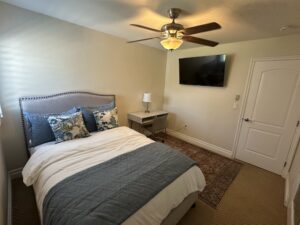
Our facility is located in a quiet neighborhood in Yorba Linda, offering a small, home-like setting in northern Orange County. This location is easily accessible to individuals from Anaheim Hills, Fullerton, Orange, and Brea. We provide both private and semi-private rooms, and our house is staffed 24/7 to ensure your safety and comfort during your stay.
We believe in the effectiveness of a small setting for residential care, as an intimate environment allows our support team to know you personally. This setting reduces the noise of larger programs, allowing you to focus completely on your healing. Our house serves as a safe base where you can connect with a small community of individuals who share similar goals.

We believe in maintaining clear boundaries regarding clinical acuity to ensure that every person receives the safest and most appropriate level of care. If you require medical detoxification, withdrawal management, or a standalone substance use program, we will thoughtfully refer you to trusted partners who specialize in those services. We do not provide medical stabilization or medical detox on-site, and we prioritize your safety above all else.
If our assessment shows that your needs exceed what our residential mental health facility can provide, we will walk with you through the referral process to ensure a smooth transition. This honesty is a core part of our commitment to your well-being. We are here to help you find the right support, even if that means connecting you with services outside of our house.
Reclaiming your stability and finding peace in your daily life is a brave step toward a fulfilling future. At We Conquer Together, our support team is ready to walk with you through every phase of your path, coordinating your mental health and physical care with deep compassion. To discuss your history and learn how we can support your path, please reach out to our treatment center in Yorba Linda today.
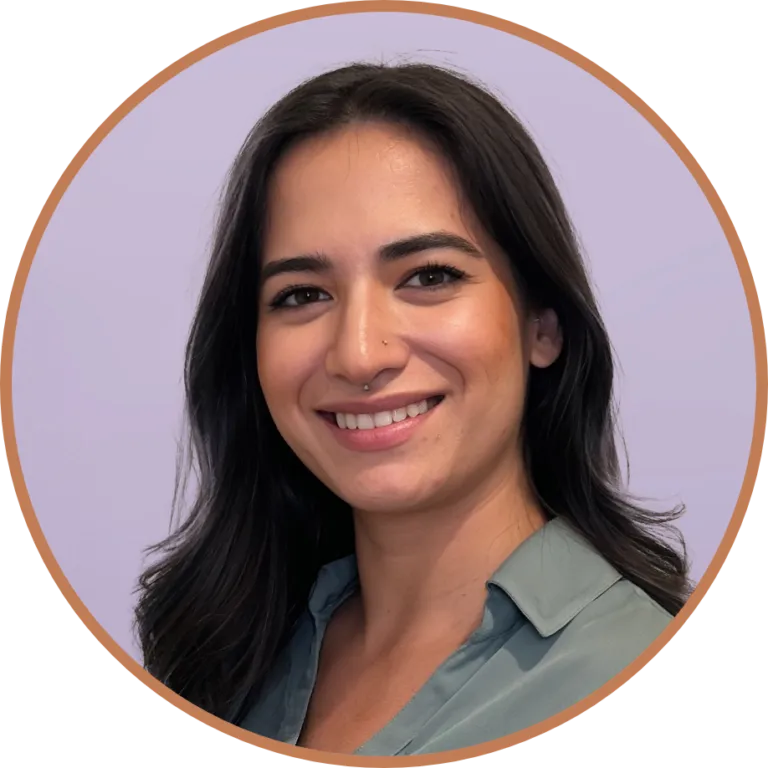
Sasha Antoun holds over six years of experience in the behavioral health treatment landscape. With a comprehensive background spanning various facets of the field, she brings a wealth of expertise to our team, offering a great understanding of every available level of care.
As an internationally certified counselor, Sasha’s professional areas of focus primarily center around admissions work and community outreach. Her passion lies in creating a sense of safety and trust for those in distress.
Medically reviewed by Dr. Kelly Gonderman, Psy.D., Licensed Clinical Psychologist
Using cannabis can interfere with your psychiatric medications and worsen symptoms of anxiety, depression, and mood swings. When cannabis is used to manage distress, it often masks the underlying symptoms, making it harder for your therapists to identify and treat the root causes of your pain. Treating both issues together is necessary to help you build lasting coping skills.
We focus on co-occurring care because treating mental health conditions and cannabis use separately often leads to relapse or unresolved emotional pain. By addressing both your psychiatric needs and your substance use under one coordinated plan, we ensure that your progress in one area supports your healing in the other. This integrated approach provides a more stable foundation for your healing.
Our residential program typically lasts from 30 to 45 days, depending on your clinical needs and insurance authorization. This timeframe allows our support team to help you stabilize your nervous system, process your history, and build sustainable habits. We work collaboratively with you throughout your stay to prepare you for a smooth transition back to your daily life.
Our registered dietitian provides personalized nutrition counseling and collaborative meal planning to help you manage the appetite changes that follow stopping cannabis. We focus on gentle, regular nourishment and menus that are easy to replicate at home to help your body rediscover its natural hunger signals. This support helps stabilize your physical health, which directly improves your mood and emotional regulation.
We use imagery rehearsal therapy to help you process and rescript trauma-related nightmares so you can find restorative sleep. Our therapists also use cognitive-behavioral therapy and somatic therapy to help you release tension and manage the hyperarousal associated with trauma. These evidence-based tools are tailored to your history to help you find safety in both your mind and your body.
If you require medical detoxification or a standalone substance use program, we will provide an honest assessment and refer you to a trusted provider who specializes in those services. Your safety is our primary concern, and we maintain strict clinical boundaries to ensure you receive the correct level of support. We will help coordinate your transition to ensure you are held and supported throughout the process.
We Conquer Together
We firmly believe that the internet should be available and accessible to anyone, and are committed to providing a website that is accessible to the widest possible audience, regardless of circumstance and ability.
To fulfill this, we aim to adhere as strictly as possible to the World Wide Web Consortium’s (W3C) Web Content Accessibility Guidelines 2.1 (WCAG 2.1) at the AA level. These guidelines explain how to make web content accessible to people with a wide array of disabilities. Complying with those guidelines helps us ensure that the website is accessible to all people: blind people, people with motor impairments, visual impairment, cognitive disabilities, and more.
This website utilizes various technologies that are meant to make it as accessible as possible at all times. We utilize an accessibility interface that allows persons with specific disabilities to adjust the website’s UI (user interface) and design it to their personal needs.
Additionally, the website utilizes an AI-based application that runs in the background and optimizes its accessibility level constantly. This application remediates the website’s HTML, adapts Its functionality and behavior for screen-readers used by the blind users, and for keyboard functions used by individuals with motor impairments.
If you’ve found a malfunction or have ideas for improvement, we’ll be happy to hear from you. You can reach out to the website’s operators by using the following email
Our website implements the ARIA attributes (Accessible Rich Internet Applications) technique, alongside various different behavioral changes, to ensure blind users visiting with screen-readers are able to read, comprehend, and enjoy the website’s functions. As soon as a user with a screen-reader enters your site, they immediately receive a prompt to enter the Screen-Reader Profile so they can browse and operate your site effectively. Here’s how our website covers some of the most important screen-reader requirements, alongside console screenshots of code examples:
Screen-reader optimization: we run a background process that learns the website’s components from top to bottom, to ensure ongoing compliance even when updating the website. In this process, we provide screen-readers with meaningful data using the ARIA set of attributes. For example, we provide accurate form labels; descriptions for actionable icons (social media icons, search icons, cart icons, etc.); validation guidance for form inputs; element roles such as buttons, menus, modal dialogues (popups), and others. Additionally, the background process scans all the website’s images and provides an accurate and meaningful image-object-recognition-based description as an ALT (alternate text) tag for images that are not described. It will also extract texts that are embedded within the image, using an OCR (optical character recognition) technology. To turn on screen-reader adjustments at any time, users need only to press the Alt+1 keyboard combination. Screen-reader users also get automatic announcements to turn the Screen-reader mode on as soon as they enter the website.
These adjustments are compatible with all popular screen readers, including JAWS and NVDA.
Keyboard navigation optimization: The background process also adjusts the website’s HTML, and adds various behaviors using JavaScript code to make the website operable by the keyboard. This includes the ability to navigate the website using the Tab and Shift+Tab keys, operate dropdowns with the arrow keys, close them with Esc, trigger buttons and links using the Enter key, navigate between radio and checkbox elements using the arrow keys, and fill them in with the Spacebar or Enter key.Additionally, keyboard users will find quick-navigation and content-skip menus, available at any time by clicking Alt+1, or as the first elements of the site while navigating with the keyboard. The background process also handles triggered popups by moving the keyboard focus towards them as soon as they appear, and not allow the focus drift outside it.
Users can also use shortcuts such as “M” (menus), “H” (headings), “F” (forms), “B” (buttons), and “G” (graphics) to jump to specific elements.
We aim to support the widest array of browsers and assistive technologies as possible, so our users can choose the best fitting tools for them, with as few limitations as possible. Therefore, we have worked very hard to be able to support all major systems that comprise over 95% of the user market share including Google Chrome, Mozilla Firefox, Apple Safari, Opera and Microsoft Edge, JAWS and NVDA (screen readers).
Despite our very best efforts to allow anybody to adjust the website to their needs. There may still be pages or sections that are not fully accessible, are in the process of becoming accessible, or are lacking an adequate technological solution to make them accessible. Still, we are continually improving our accessibility, adding, updating and improving its options and features, and developing and adopting new technologies. All this is meant to reach the optimal level of accessibility, following technological advancements. For any assistance, please reach out to