




When a woman experiences a psychiatric condition alongside disordered eating, receiving care from separate programs creates a split path that delays healing. At We Conquer Together, the psychiatric condition and the disordered eating are assessed together, at the same time, by one team, and treated inside one plan in one house. Our clinical support team includes therapists, psychiatric providers, nurse practitioners, and a registered dietitian, ensuring that medication management and emotional support run throughout your stay rather than being arranged elsewhere.
We provide detailed care where eating disorders in women are treated alongside co-occurring mood and anxiety struggles. Clinicians evaluate specific co-occurring pairings, including major depression with anorexia, obsessive-compulsive traits with trauma, and neurodivergence alongside avoidant/restrictive food intake disorder, as well as any of those conditions occurring alongside alcohol or cannabis use. Substance use is treated here strictly as a co-occurring presentation alongside a primary mental health condition rather than as a standalone substance use or detox program. We view neurodivergence as a natural way of being rather than a deficit, tailoring our therapeutic approach to accommodate individual processing styles. For women whose symptoms require structured daily oversight, receiving integrated mental health and eating disorder treatment for women offers a quiet, home-like environment to focus on healing.
Women may enter treatment with experiences that influence how they understand safety, relationships, their bodies, and their sense of self. While the therapies used in treatment are not necessarily different for women, effective care considers the context behind each person’s symptoms and behaviors. This can mean creating space to address trauma and safety, motherhood and caregiving, relationships and boundaries, body and reproductive health, and identity and self-worth as part of the broader recovery process.
When one half of the clinical picture is treated and the other is referred out, the untreated half pulls the treated half back down. Many women arrive here having already completed a program that stabilized disordered eating behaviors and handed the psychiatry to an outside prescriber seen briefly, or a program that adjusted medication while food habits went unexamined because eating was not the presenting problem.
This separation fails because co-occurring mental health and eating disorders directly interact with one another. Depression makes it difficult to prepare food and eat in a way that lets the brain work, while physical undernourishment makes depression harder to treat. Similarly, anxiety and obsessive patterns organize themselves around food when food is where control feels available. Experiencing a relapse after a split program like that is a predictable outcome of a split plan, not evidence that you failed or that you have tried too many things. Seeking treatment after relapse gives clinicians the necessary history to address unexamined patterns.
At We Conquer Together, our registered dietitian is a core member of the care plan whether the reason for admission is a mental health condition, an eating disorder, or both, with the aim of building food habits you can actually make in your own kitchen afterward. Anyone can eat well in a house where someone else cooks, so the work here focuses on building menus that survive going home, which is where unhelpful patterns usually restart.
Nutrition counseling happens weekly, meals are prepared and eaten family style at a table, and our dietitian builds menus around your own culture, background, and personal habits rather than handing over a standard template. According to guidance from the Substance Abuse and Mental Health Services Administration (SAMHSA), integrating physical wellness and clinical nutrition into mental health care creates a strong foundation for emotional stability. This integrated approach ensures that dietitian-led residential treatment works directly alongside psychiatric therapy to establish long-term wellness.
Eating disorders occur at every body size. Many women arrive at treatment having experienced a moment where a healthcare provider praised a behavior or eating restriction that was actually an active symptom of an illness. Behavior that is encouraged as discipline or wellness in a larger body is recognized as illness in a smaller one, yet the physical and psychological toll remains identical. When a medical visit focuses solely on body appearance, serious eating disorders in women go unaddressed, leaving individuals to struggle in silence with disordered eating patterns that deserve clinical care.
Our support team approaches care through weight-inclusive eating disorder treatment, treating weight inclusivity as an essential clinical position that changes how you are assessed and what questions clinicians ask. We evaluate symptoms without making assumptions based on physical size, providing specialized care for anorexia nervosa, bulimia nervosa, binge eating disorder, avoidant/restrictive food intake disorder, and body dysmorphic disorder. Our clinicians also provide dedicated support for OSFED alongside atypical anorexia treatment and co-occurring depression and anorexia, ensuring that every woman receives an accurate clinical evaluation and a unified care plan tailored to her lived experience.
Our admissions team at We Conquer Together is standing by to answer your questions and support you or your loved one. Contact us today to receive a free, no-obligation verification of your benefits.
Trauma is a large part of what a house this size addresses, and the symptoms that get left out of standard intake forms are often the ones that receive dedicated attention here. Nightmare disruptions are one of the clearest examples, and individuals in our care are responding well to Imagery Rehearsal Therapy for nightmares.
Clinicians keep nightmares and sleep terrors distinct because they arise from different sleep states. Nightmares occur during rapid eye movement sleep and are remembered upon waking, making them responsive to Imagery Rehearsal Therapy, whereas sleep terrors occur during non-REM sleep. Our care incorporates evidence-based approaches, including Dialectical Behavior Therapy skills, Cognitive Behavioral Therapy, Acceptance and Commitment Therapy, motivational interviewing, Internal Family Systems, somatic therapy, mindfulness, trauma-focused therapy, art therapy, yoga, and family therapy. When treating co-occurring obsessive-compulsive traits, clinicians provide Exposure and Response Prevention, which is the standard of care for OCD.
A previous stay in a program that treated only one half of your experience is not evidence that treatment does not work for you, and a relapse after a split plan is information about the plan rather than a verdict on you. Recovery is not linear, and having lived through these challenges before simply helps our team understand what was tried, what helped, and what was never addressed.
Our clinical support team evaluates your history in detail to build a plan that accounts for your specific patterns. If an individual requires medical stabilization prior to residential admission, our support team helps them reach an appropriate medical setting and remains available to support them afterward. If things feel unsafe right now or if you are experiencing thoughts of self-harm, please call or text the 988 Lifeline at 988 for free, confidential support available around the clock. Knowing that individuals have died by suicide underscores why accessing immediate clinical assistance is necessary during moments of crisis.
Choosing residential eating disorder treatment in Orange County provides a structured environment where you can step away from daily triggers and focus entirely on well-being. Our program is set in a quiet, home-like house featuring private and semi-private rooms and round-the-clock staffing for residential mental health treatment in Yorba Linda families rely on.
Daily life involves structured therapeutic programming, individual therapy, group sessions, psychiatric medication management, and dietitian-led nutrition support. Because our house maintains a small capacity, group content is shaped dynamically around the individuals living in the home that week.
In past treatment settings, women are frequently asked to pick which problem to present first and get treated for that single issue. An assessment at We Conquer Together looks at the psychiatric condition, the eating patterns, trauma history, sleep, and any alcohol or cannabis use in one conversation, building a care plan from the whole picture.
This call is a clinical conversation with our admissions support team to explore your history, not a commitment or a diagnosis delivered over the phone. During this initial step, our admissions support team walks through insurance verification details with you before anything is scheduled, explaining what information is needed to confirm your options. For family members helping a loved one explore treatment, if you want to discuss your history and explore women’s residential mental health treatment options, reach out to We Conquer Together today.
Yes, psychiatric conditions and disordered eating can be treated simultaneously under one care plan, by one team, in one house. Splitting these issues into separate programs often fails because the untreated condition pulls overall stability back down. Treating both halves together establishes a strong foundation for lasting healing.
Eating disorders occur at every body size, and behaviors that are praised in one body are frequently diagnosed as symptoms in another. Healthcare providers who rely solely on body appearance often miss serious nutritional and emotional distress. A clinical assessment evaluates your actual symptoms and relationship with food rather than your physical size.
Yes, a previous program that addressed only part of your condition provides valuable clinical history rather than proof that care cannot work for you. Recovery is not linear, and returning to treatment allows our team to address the underlying patterns that were left unexamined before.
Our registered dietitian works with every individual in our house through weekly individual sessions, culturally informed menu planning, and family-style meals shared at a table. Because depression and anxiety frequently cause self-care routines and eating to break down, nutrition support helps stabilize mood and restore physical energy.
Substance use is addressed strictly as a co-occurring presentation alongside a primary mental health or eating disorder condition. Our residential facility does not operate as a standalone substance use or detox program, and discussing your usage during an admissions call helps determine whether our setting is the right fit.
The first call is a confidential assessment conversation with our admissions support team to discuss your health history, daily struggles, and goals for care. Admissions also manages benefits verification and reviews practical logistics with you before any stay is scheduled.
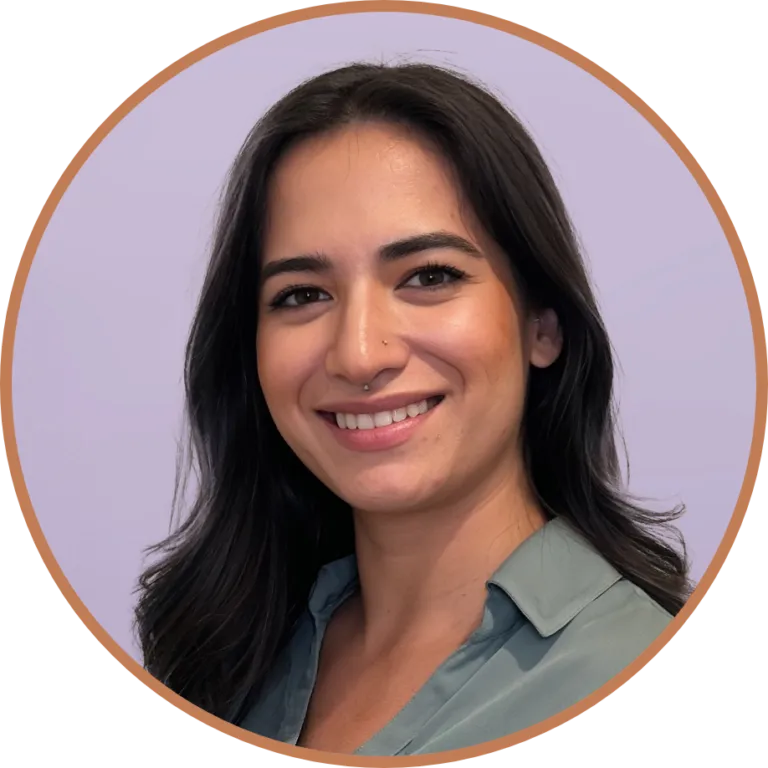
Sasha Antoun holds over six years of experience in the behavioral health treatment landscape. With a comprehensive background spanning various facets of the field, she brings a wealth of expertise to our team, offering a great understanding of every available level of care.
As an internationally certified counselor, Sasha’s professional areas of focus primarily center around admissions work and community outreach. Her passion lies in creating a sense of safety and trust for those in distress.
Clinically reviewed by Dr. Kelly Gonderman, Psy.D., Licensed Clinical Psychologist
Check out our blogs for information on mental health and eating disorder treatment.
We Conquer Together
We firmly believe that the internet should be available and accessible to anyone, and are committed to providing a website that is accessible to the widest possible audience, regardless of circumstance and ability.
To fulfill this, we aim to adhere as strictly as possible to the World Wide Web Consortium’s (W3C) Web Content Accessibility Guidelines 2.1 (WCAG 2.1) at the AA level. These guidelines explain how to make web content accessible to people with a wide array of disabilities. Complying with those guidelines helps us ensure that the website is accessible to all people: blind people, people with motor impairments, visual impairment, cognitive disabilities, and more.
This website utilizes various technologies that are meant to make it as accessible as possible at all times. We utilize an accessibility interface that allows persons with specific disabilities to adjust the website’s UI (user interface) and design it to their personal needs.
Additionally, the website utilizes an AI-based application that runs in the background and optimizes its accessibility level constantly. This application remediates the website’s HTML, adapts Its functionality and behavior for screen-readers used by the blind users, and for keyboard functions used by individuals with motor impairments.
If you’ve found a malfunction or have ideas for improvement, we’ll be happy to hear from you. You can reach out to the website’s operators by using the following email
Our website implements the ARIA attributes (Accessible Rich Internet Applications) technique, alongside various different behavioral changes, to ensure blind users visiting with screen-readers are able to read, comprehend, and enjoy the website’s functions. As soon as a user with a screen-reader enters your site, they immediately receive a prompt to enter the Screen-Reader Profile so they can browse and operate your site effectively. Here’s how our website covers some of the most important screen-reader requirements, alongside console screenshots of code examples:
Screen-reader optimization: we run a background process that learns the website’s components from top to bottom, to ensure ongoing compliance even when updating the website. In this process, we provide screen-readers with meaningful data using the ARIA set of attributes. For example, we provide accurate form labels; descriptions for actionable icons (social media icons, search icons, cart icons, etc.); validation guidance for form inputs; element roles such as buttons, menus, modal dialogues (popups), and others. Additionally, the background process scans all the website’s images and provides an accurate and meaningful image-object-recognition-based description as an ALT (alternate text) tag for images that are not described. It will also extract texts that are embedded within the image, using an OCR (optical character recognition) technology. To turn on screen-reader adjustments at any time, users need only to press the Alt+1 keyboard combination. Screen-reader users also get automatic announcements to turn the Screen-reader mode on as soon as they enter the website.
These adjustments are compatible with all popular screen readers, including JAWS and NVDA.
Keyboard navigation optimization: The background process also adjusts the website’s HTML, and adds various behaviors using JavaScript code to make the website operable by the keyboard. This includes the ability to navigate the website using the Tab and Shift+Tab keys, operate dropdowns with the arrow keys, close them with Esc, trigger buttons and links using the Enter key, navigate between radio and checkbox elements using the arrow keys, and fill them in with the Spacebar or Enter key.Additionally, keyboard users will find quick-navigation and content-skip menus, available at any time by clicking Alt+1, or as the first elements of the site while navigating with the keyboard. The background process also handles triggered popups by moving the keyboard focus towards them as soon as they appear, and not allow the focus drift outside it.
Users can also use shortcuts such as “M” (menus), “H” (headings), “F” (forms), “B” (buttons), and “G” (graphics) to jump to specific elements.
We aim to support the widest array of browsers and assistive technologies as possible, so our users can choose the best fitting tools for them, with as few limitations as possible. Therefore, we have worked very hard to be able to support all major systems that comprise over 95% of the user market share including Google Chrome, Mozilla Firefox, Apple Safari, Opera and Microsoft Edge, JAWS and NVDA (screen readers).
Despite our very best efforts to allow anybody to adjust the website to their needs. There may still be pages or sections that are not fully accessible, are in the process of becoming accessible, or are lacking an adequate technological solution to make them accessible. Still, we are continually improving our accessibility, adding, updating and improving its options and features, and developing and adopting new technologies. All this is meant to reach the optimal level of accessibility, following technological advancements. For any assistance, please reach out to